
· Mark Davis · general · 7 min read
6. 😮 The Art of the Surprise: How Not to Sync Board Members Before Meetings
Learn how to master boardroom chaos (or avoid it) with this satirical guide for startup CEOs. Explore why poor stakeholder communication tools, missed board updates, and last-minute surprises can damage trust—and even impact D&O insurance for startups.
🚨 Disclaimer: This guide is purely satirical and intended for entertainment purposes only. Any actual attempts to follow this advice could significantly increase friction with your board, complicate your startup governance, or void your D&O insurance. Proceed responsibly—or better yet, don’t. Especially if you enjoy affordable D&O insurance for startups.
Welcome back to The Startup CEO’s Guide to Mastering Boardroom Chaos, your definitive handbook for subtly—or not so subtly—ensuring every board meeting remains unforgettable.
Today’s lesson: The Art of the Surprise. Forget tedious concepts like “alignment” and “preparation.” True boardroom legends thrive on the gasps, frantic Slack messages, and stunned silences.
Pro tip: This approach pairs wonderfully with the higher premiums D&O insurance startups adore.
📚 The Complete Chaos Series
This is Part 6 of our satirical series on boardroom dysfunction. Catch up on earlier episodes:
| # | Episode | What You’ll “Learn” |
|---|---|---|
| 1 | The Data Disaster | Confuse your board with numerical nonsense |
| 2 | Who Needs One Source of Truth? | Maintain multiple conflicting data sources |
| 3 | KPI Roulette | Change metrics constantly to stay unpredictable |
| 4 | Scheduling Shenanigans | Weaponize your calendar like a maverick |
| 5 | How to Gaslight Your Board | Delay and rewrite meeting minutes |
| 6 | The Art of the Surprise (You are here) | Never sync board members before meetings |
Should Leaders Skip Preparation to Get Genuine Board Reactions?
Why deny yourself life’s purest thrills? Real CEOs understand briefing board members ahead of meetings only dilutes their genuine reactions.
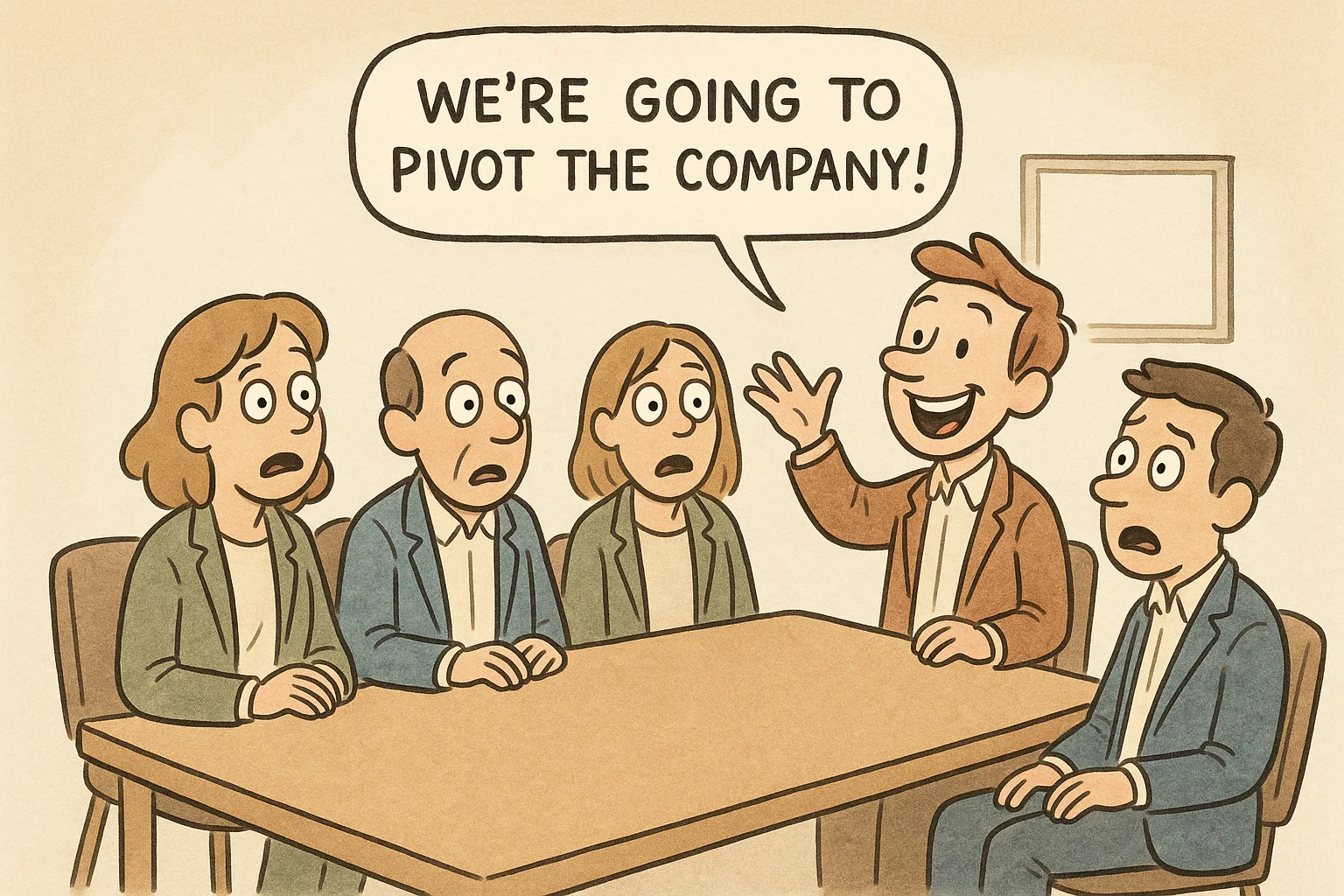
Instead, stride confidently into the room armed with shocking news, bold pivots, and perhaps an unexpected acquisition nobody saw coming. Shock is the ultimate influencer.
CEO: “We decided yesterday to sunset our core product. Exciting, right?”
Lead Investor (visibly pale): “Wait… core product?”
Of course, some less adventurous types still cling desperately to pre-reads and stakeholder communication tools like “briefings.” Bless their cautious hearts.
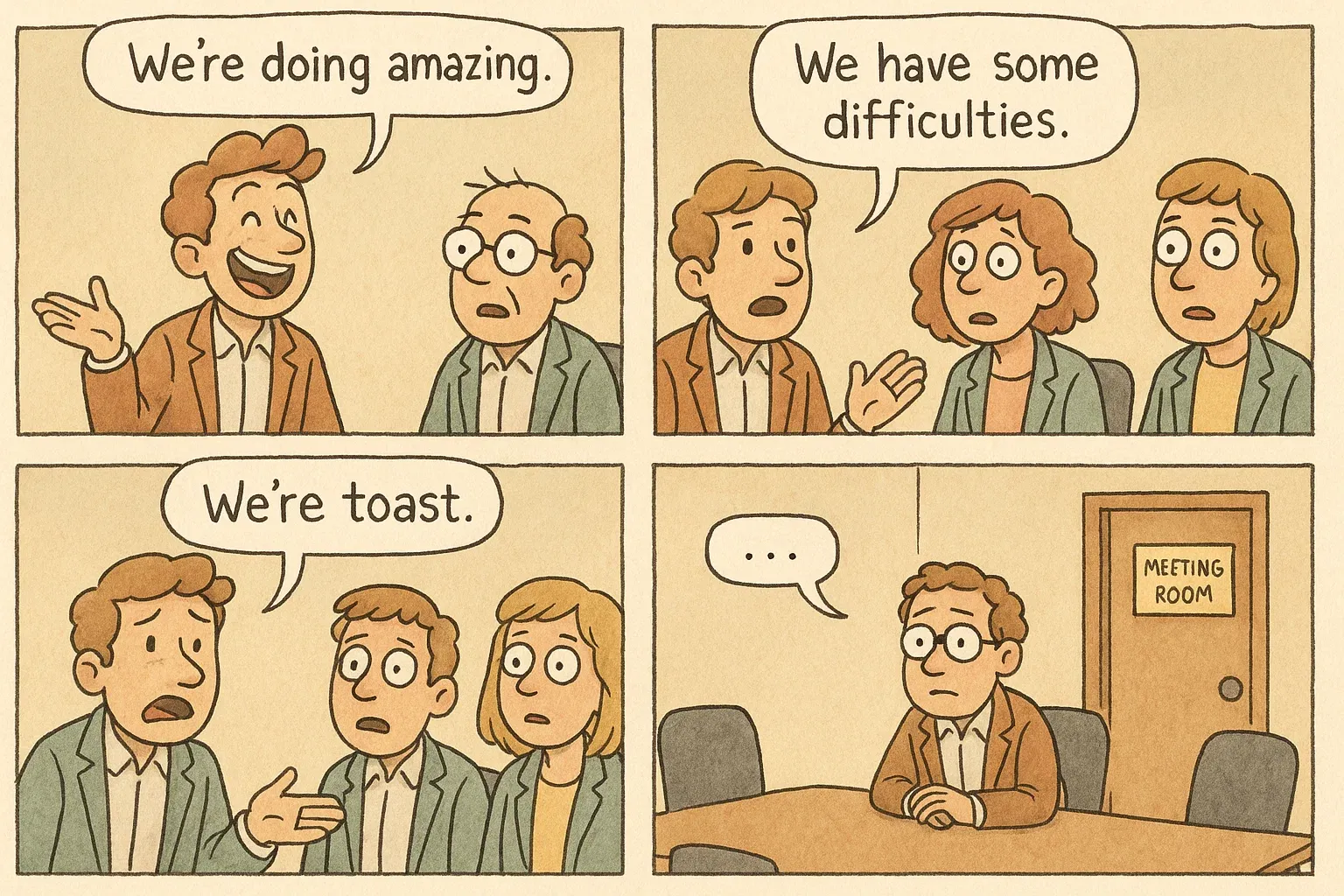
What Happens When You Selectively Sync Board Members?
If syncing with board members feels unavoidable, at least keep it inconsistent.
Brief just two—preferably the least relevant—and leave the rest blissfully unaware.
This strategy ensures plausible deniability. When the meeting devolves into open civil war, you can genuinely exclaim, “But I thought everyone knew!”
CEO: “I ran it by Bob, and he agreed.”
Board Member: “Bob manages a dog-food fund. This is a B2B AI decision.”
Traditionalists might still argue that briefing relevant expertise yields “better outcomes,” even daring to reference archaic concepts like startup board of directors responsibilities. As if those still matter.
Can You Assume Board Members Never Talk to Each Other?
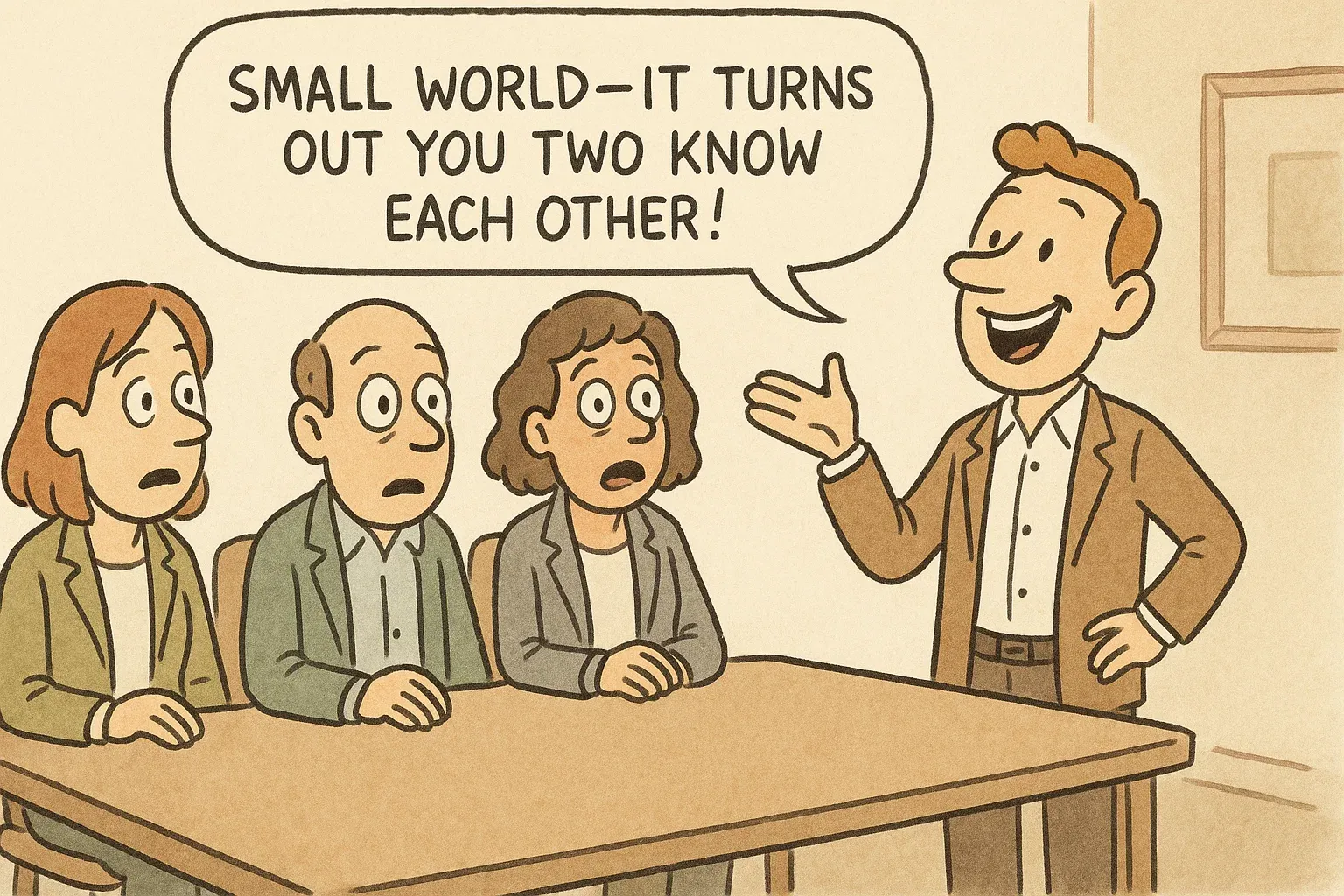
Imagine each board member confined to a tidy little silo, blissfully ignorant of their peers’ conversations.
Now, actively build your update strategy around that delightful fiction.
Deliver slightly varying narratives to different directors, then enjoy the ensuing spectacle.
Board Member A: “You said the burn rate is $300K.”
Board Member B: “You told me $450K.”
CEO (weak smile): “Numbers evolve. It’s a startup.”
Some say certain CEOs actually attempt “consistent messaging” to avoid such drama, leveraging stakeholder communication tools like status updates, pre-reads, and phone calls. Brave souls, indeed.
Should You Deliver Critical News Live Without Proper Pre-Reads?
The optimal time to disclose layoffs, SEC inquiries, or mass customer exodus is undoubtedly mid-meeting.
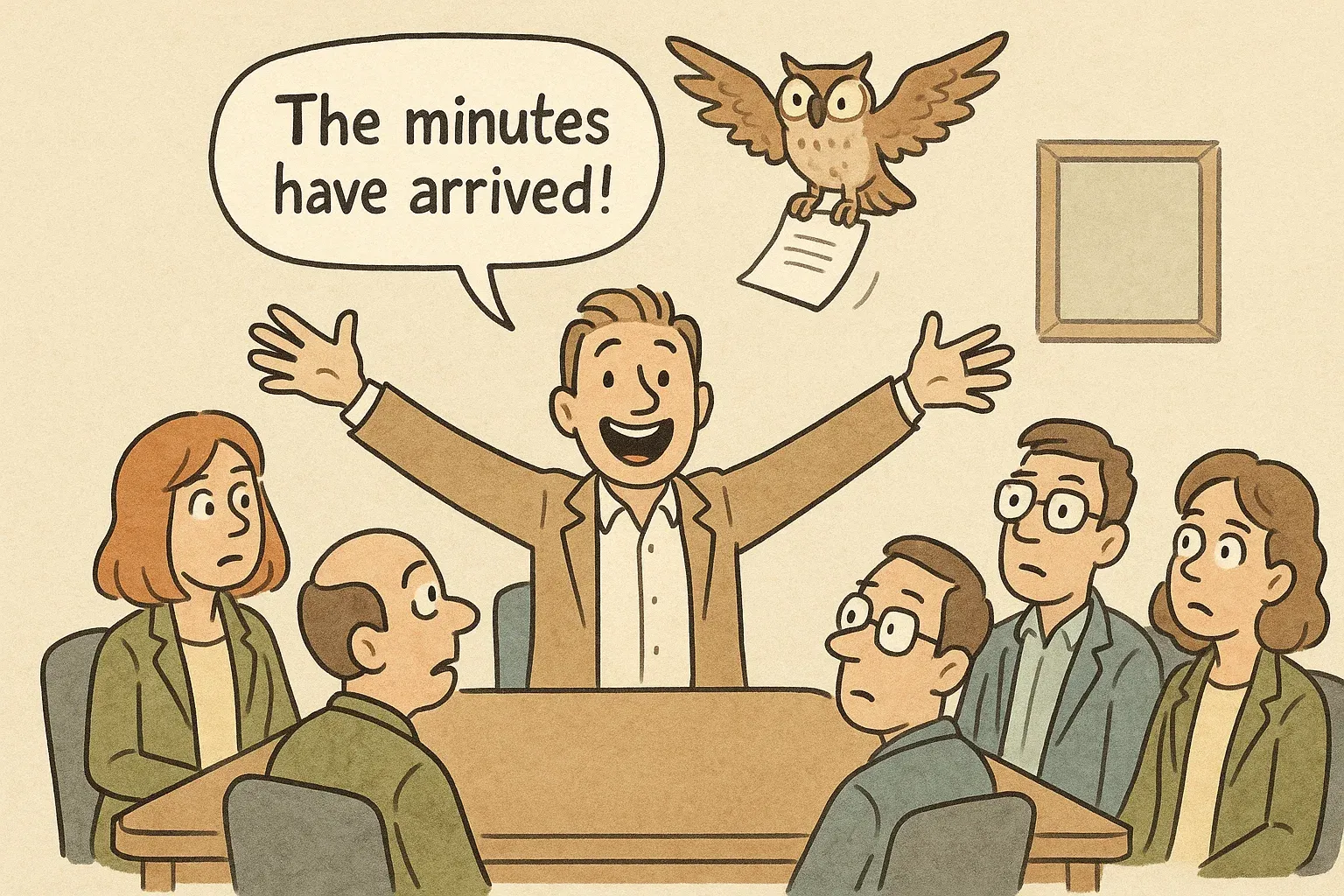
If anyone dares object, calmly remind them you did send an update—a 112-slide deck emailed at 2:04 AM, hidden between the updated mission statement and an appendix labeled “optional marketing experiments.”
CEO: “It was all in the pre-read I sent last night.”
Board Member: “The one timestamped 2:17 AM?”
Other Board Member: “I fell asleep by slide seven.”
Some old-fashioned directors maintain that major updates deserve daylight, preparation, and thoughtful handling—aligned with those dusty documents on startup board of directors responsibilities nobody reads anymore.
What Are the Consequences of Not Syncing Board Members?
Bravo. You’ve fully embraced your inner chaos artisan:
- No prep? Check.
- Selective misinformation? Check.
- Real-time meltdowns? Expertly delivered.
Next time someone brings up “alignment,” just smile enigmatically and schedule another 9 AM surprise.
And if asked why your D&O insurance for startups suddenly tripled, confidently reply it’s the cost of “leading boldly.”
🎯 Okay, Seriously: What TO Do Instead
Now that we’ve had our fun, here’s what effective board communication actually looks like:
Pre-Meeting Sync Checklist
| Timing | Action | Why It Matters |
|---|---|---|
| T-7 days | Send board pack with clear executive summary | Gives directors time to read and reflect |
| T-5 days | Individual calls with key directors on sensitive items | No surprises; surfaces concerns early |
| T-3 days | Reminder email; offer to answer questions | Shows respect for their time |
| T-1 day | Brief Chair on any last-minute developments | Chair can help manage discussion |
The “No Surprises” Rule
Experienced CEOs follow this principle: Directors should never learn material information for the first time in a board meeting.
Material information includes:
- Significant revenue misses or beats
- Key executive departures or hires
- Major customer wins or losses
- Fundraising updates or runway concerns
- Legal or regulatory issues
- Strategic pivots
Quick Sync Call Template (15 minutes)
When you need to brief a director before the meeting:
- Open (2 min): “I wanted to give you a heads-up on something before Thursday’s meeting.”
- Context (5 min): Explain the situation factually
- Your take (3 min): Share your recommendation and reasoning
- Their input (5 min): “What concerns do you have? What am I missing?”
Building Trust Through Transparency
| Instead of… | Try… |
|---|---|
| Hiding bad news | ”Here’s what happened, here’s what we learned, here’s what we’re doing” |
| Selective briefings | Same message to all directors; consistent data |
| 2 AM pre-reads | Materials 5 days before; concise executive summary |
| Springing decisions | Flagging items as “for discussion” vs “for decision” in agenda |
The paradox: CEOs who are transparent about problems build more trust than those who hide them. Directors know startups are hard. They expect challenges. What they can’t forgive is being blindsided.
FAQ
Should board members be synced before board meetings?
Yes, board members should always be synced before formal board meetings. Best practice requires distributing board materials 5-7 days in advance and conducting one-on-one pre-calls with key board members to preview critical issues. A board meeting is only as good as the preparation that went into it. Surprising board members with material information during meetings wastes valuable discussion time and can lead to poor decision-making under pressure.
What happens when you selectively sync only some board members?
Selectively syncing only certain board members creates information asymmetry and erodes board trust. This practice violates fiduciary duty principles requiring equal access to material information. Board members who discover they were excluded from pre-meeting briefings often lose confidence in management. Give every director the same material information at the same time — that is what keeps the governance structure intact and keeps the company out of avoidable disputes about who knew what.
How far in advance should board materials be sent?
Board materials should be distributed 5-7 days before the scheduled meeting, with some organizations requiring 10 days for complex matters. That window is what lets directors review materials, conduct independent research, and formulate informed questions. Materials should include financial statements, management reports, and pre-reads on any decisions requiring board approval. Last-minute distribution undermines board effectiveness and suggests poor organizational planning.
Can you assume board members don’t communicate between meetings?
No, board members regularly communicate with each other between formal meetings, and assuming otherwise is a critical governance mistake. Directors often serve together on multiple boards, attend industry events, and maintain professional relationships. Information gaps or inconsistencies discovered through informal channels damage management credibility and create governance complications. Effective CEOs proactively manage board communications and ensure all directors receive consistent, complete information through official channels.
What are the consequences of surprising board members with bad news?
Surprising board members with material negative information during meetings typically results in defensive reactions, emergency sessions, and damaged management credibility. Directors need time to process difficult information, consult advisors, and develop thoughtful responses. Delivering bad news without warning often triggers board micromanagement, emergency oversight committees, and in severe cases, leadership changes or investor confidence issues.
Part of our Board Member Guide — Your go-to resource for board member roles, responsibilities, and best practices.
Related Reading
- The Board of Directors Role in Crisis Management and Response Strategies
- Strategies and tools for stakeholder communication
Mark Davis
Founder, I'mBoard
Mark Davis is Founder of I'mBoard. Having served on dozens of startup boards, he knows the pains from both sides of the table - as an exited founder/CEO turned investor.